
A little less than a month had passed since my first visit to MTFWCS and I found myself on the train back to the mountain. I also planned to stay in advance because I like to learn from my mistakes.. (Most of the time). This time it would be for a whole weekend, while two workshops were held simultaneously. One of the workshops included learning a traditional roof hatching method. I would later learn how to harvest and process the straw as well. The other workshop included working on cutting and preparing timbers for the onsite Forge. We had the option to go back and forth between the two or stick to one.
I chose the latter of the two to begin with. It had been a shameful amount of time since I had picked up a chisel. Between my travels and being a full-time Architecture student, I had not-so-secretly started to wonder what my priorities were anymore and if I even still loved the craft if I failed to practice consistently. This question persists-even though my mission is more clear than ever. It will be no time in the grand scheme of things until I am back at it doing exclusively design-build work. For so long my worth has been tied to my productivity, and that is at least in part what I am trying to detangle myself from as I journey around the world. For now- I’ve left my boots in Virginia, and my precious tools are spread between a 5×5 storage unit and amongst friends. In favor of traveling light, the only tools I carry are a few used for whittling- and I am most certainly not proficient at carving (yet.)

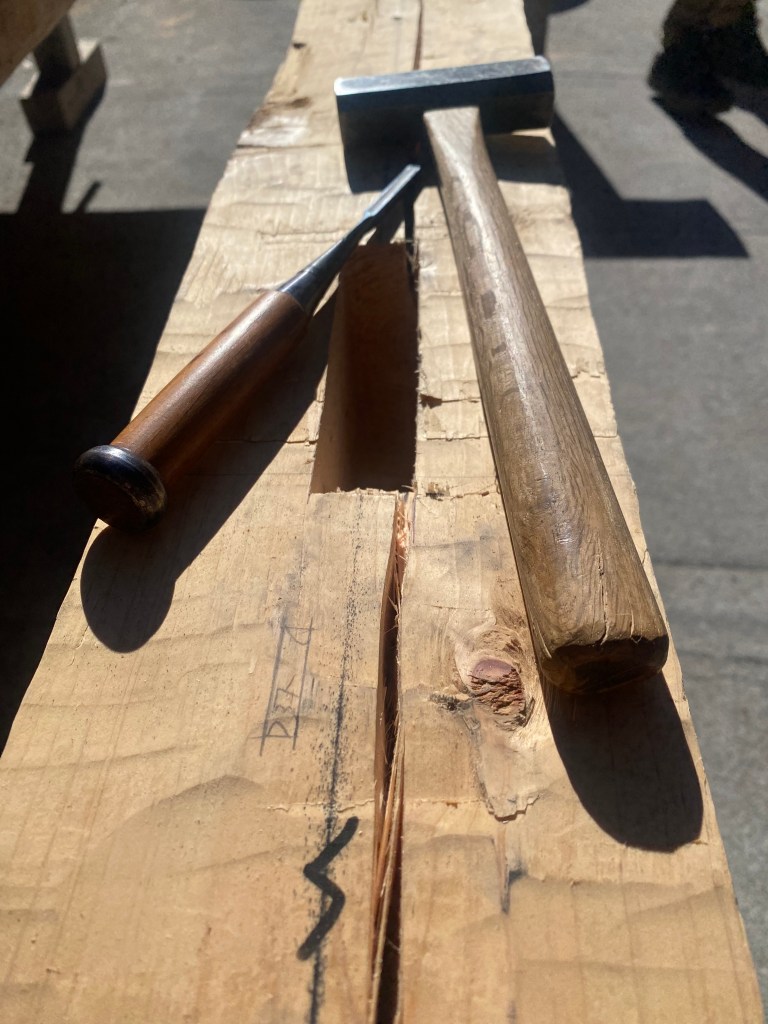
I watched and listened diligently as Tak san explained to me what we would be doing and the process of making an end cut on a timber. A process I had completed countless times before, but I was and am always open to new ways or approaches. I complete the cut and he seems at least slightly impressed at how clean the cut was. He asks me if I have done this before- to which I reply “a little bit.” I feel that there is no need to mention, I used to do it full-time. That seems like a lifetime ago and worlds apart from the here and now. I do another cut, and then move onto chisel work. I am used to large bulky western chisels, countless hours chiseling away and communing with my selves. While I do own several Japanese style chisels, they have done significantly less work and are bigger than a millimeter or two. I am happy to be here, this is my dream- to timber frame or more specifically to work with wood in Japan. I said I would do it and I am- if only for a short time. However, I am preoccupied by how clumsy my hands feel and the chisel feels light and fragile in my large hands.
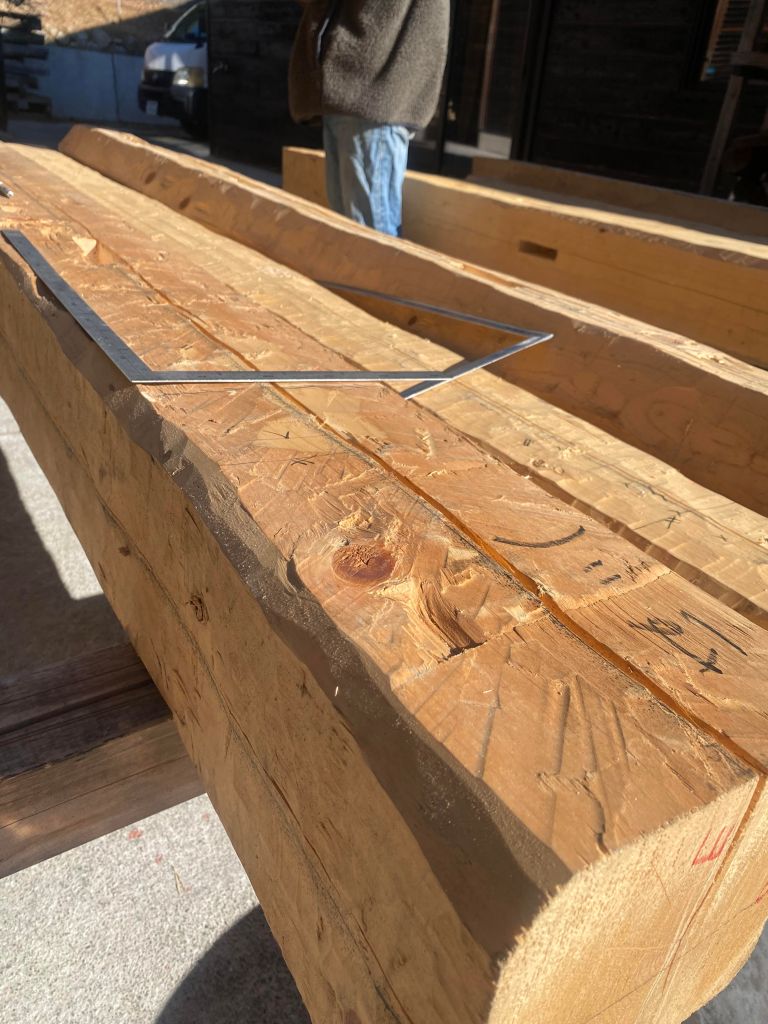
It is also cold- mountain cold outside. Nothing like the snowglobe in Southern Maryland that I used to work in. It was there that I found joy for the first time as an adult with chronic joint pain, playing (working) outdoors in the winter snow. The joy of working in a structure that you build with your own hands is unmatched. A feeling I am all too eager to replicate again as it seems like one of the most natural things a builder can do. I felt the emotion start to swell in my throat and I found myself suddenly mourning a past life in the midst of people I had only just met in a place that was foreign to me. I realised it was not that space that I was mourning, but that feeling. A feeling of purpose, and being connected to a goal that was larger than me, shaping my everyday surroundings with my hands and will I felt stuck inside myself, and as much as I wanted to dig deeper and learn about the people around me- I was wedged between my own rapid thoughts. Ruminating. Wondering what I am even doing with life, what is the end goal- why am I here? I did my best to work through it while focusing on my task- enjoying the banter around me, yet understanding little. It felt like maybe it was understood that I needed to keep to myself, or perhaps everyone was just focused on what they were doing as well, and no one cared that I was mute. I was thankful. I felt that any moment I could burst into tears. Then how could I explain myself? Luckily no one asked me to.
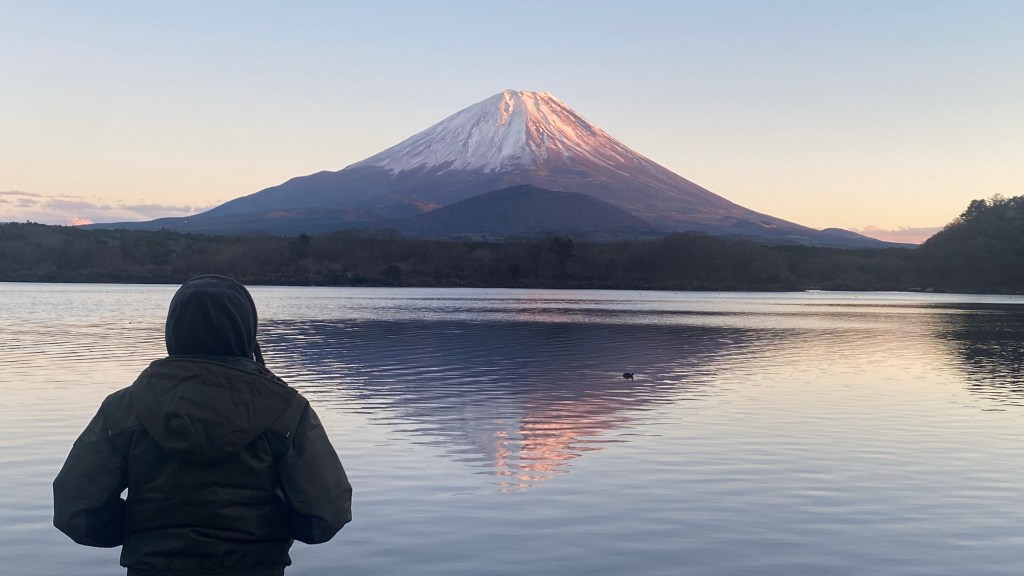
Towards the end of the day I stepped away to take a break and gather myself back together. Azsa and a new friend Kiden from Singapore appeared and asked if I wanted to go get a warm beverage and watch the sunset over Lake Shoji. The timing was divine and I thought that that sounded wonderful and if I was being honest with myself- I was tired. I decided to listen to my heart and body and took the journey. As I sat in the back seat and watched the scenery pass me by, I continued to think about my path and what had led me to this moment in time, and to this place. I saw many pieces weaving together to create the unique tapestry that is my life right now. Some pieces are prettier than others, some planned, some not so much. Kiden told us about the scenery around us- we passed the Aokigahara Forest; a famous forest in Japan that has become known as the suicide forest. I thought about how lucky I am to still be here, and all the times I thought that I wouldn’t make it. I rubbed my semi colon tattoo in appreciation for the first time in a long time and said a small prayer for those who are no longer with me. She told us about the Ice cave that has ice nearly all year around, and I marveled at the amount of wonders in the world I had yet to see. I vowed to keep exploring, keep witnessing the beauty of the world as long as I had eyes to see and feet to walk.
We made it to the lake just in time to settle in and watch the ducks do their diving dances. I witnessed the best view of Fuji san I had seen yet. As the sun started to set more and more people started to pull up to the shore and set up their camera gear. Lake Shoji is a famous place to watch the sunset for obvious reasons. The winter colors go from orange, to pink, to purple- and when the wind is still you get to see an almost perfect mirror reflection on Fuji in the lake. We stood there in silence observing her in all her beauty, reflecting her magnificence in all directions. It was so silent, all you could hear was the light clicking of cameras and deep breathing. As I watched her reflection dance on the lake, I saw myself reflected back at me, and for the first time I could not tell the difference between her and I. I was reminded of my power, and how magnificent I am no matter how much I may try to cower away from my destiny. The wind started to pick back up and when it was too cold to bear anymore we made our departure back to MTFWCS.
We had a wonderful meal of hotpot, and drank delicious locally crafted Sake with our new friends. I drank way more than I usually do- which is not at all, or once in a very blue moon. There was laughter and stories, and I talked about my career as a carpenter and how I ended up back in school in my mid 30’s. I was met with fascination and more inquiry which was refreshing. We talked about what it took to make soba, and how a new friend Togo-san’s grandfather is a soba master. I thought about what it would be like to master one thing in life, and if I ever would. I walked away with a new perspective on dedication and the meaning of friendship. Looking back on those moments now, I think of the saying by Confucius, who said: “Is it not delightful to have friends coming from afar?” Some friends are for moments, others for lifetime, but the best ones lead us to our own virtue.
The next day we headed out as a group to an area near the base of Fuji-san in order to harvest the straw for the thatched roof. I was told it was an area that you needed a special permit or clearance to be in, and that you were only allowed to come on Sunday. It felt good to be a part of a team, on a mission to help preserve these traditional techniques. I was reminded of the feeling I had mourned the previous day, and I felt a piece of my heart start to mend. I thought back to an extensive reading I had received almost 10 years prior, where I learned that it would be hard for me to call one place home and that I would find peace and kinship in many lands near and far. That I am a wanderer of sorts, and I have been and will be a part of building many worlds. Observing arbitrary borders created by men isn’t my gig so to speak. I can be a part of something larger than me in any time and space, and will continue to do so. I found reassurance there. Harvesting the straw is a simple yet laborious task. We worked cheerfully throughout the day and took a break only for the local noodle spot down the road and a soft cream. Both were fantastic.

Later that night I lay awake churning with the full moon like waves in the ocean. The sight of Mt. Fuji illuminated by the moon was almost too much for my druid heart to bear. I cried harder than I had allowed myself to in a long time. I knew that this moment was both the beginning and an end. The end of a chapter that took so much, and the beginning of one that would require much more of me.
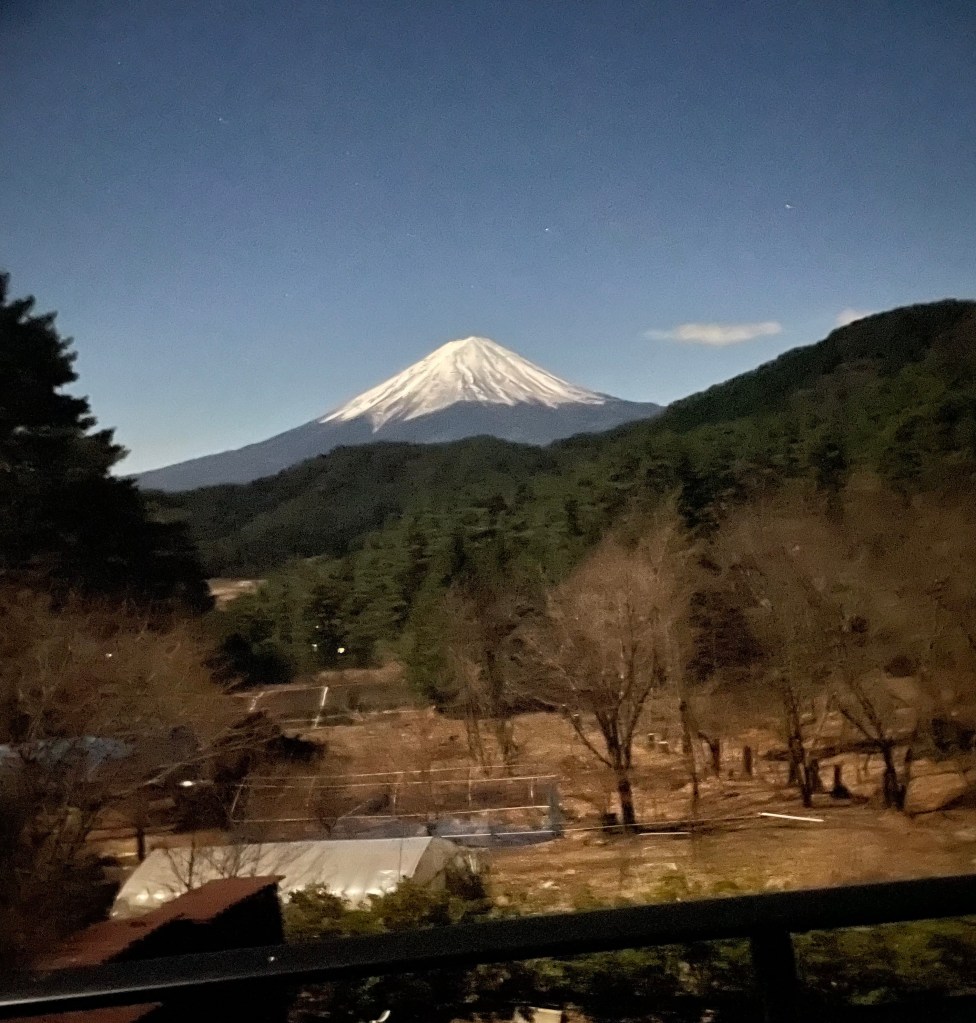
I accepted the challenge and hurled all of the reservations I held at the full moon as she beckoned me to release and lean in.
-Amber Alyn


 DRIFTWOOD ALCHEMY